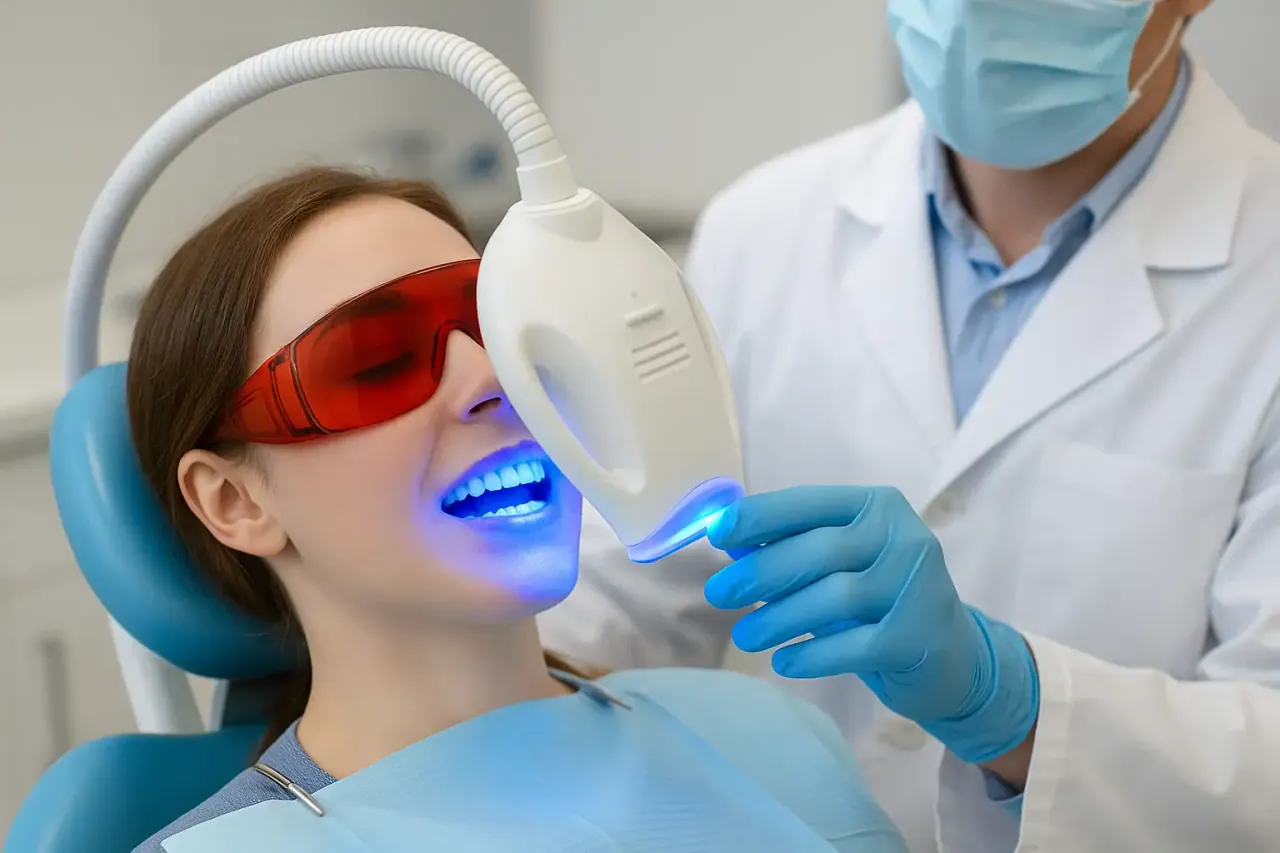
Teeth Whitening: Types, Benefits, Procedure, Cost & Aftercare
A bright, healthy-looking smile can make you feel more confident. But over time, teeth can become yellow or stained because of food, beverages, tobacco, ageing, or changes within the tooth itself. Teeth whitening is one of the most popular cosmetic dental treatments for improving the appearance of discolored teeth.
Modern teeth whitening treatments can lighten many types of surface stains safely when they are performed or recommended by a dental professional. However, whitening is not suitable for every type of discoloration, and the best approach depends on the condition of your teeth and gums.
What Is Teeth Whitening?
Teeth whitening is a cosmetic dental procedure used to make natural teeth appear lighter. Professional whitening products generally contain bleaching agents that can break down certain stains and lighten the overall shade of the teeth.
The treatment does not permanently change the natural color of your teeth. Results vary from person to person and can gradually fade as new stains develop.
Why Do Teeth Become Yellow or Discolored?
Tooth discoloration can happen for many reasons. Some stains develop on the outside surface of the teeth, while others occur within the tooth.
Tea and coffee
Frequent consumption of tea, coffee, and other strongly colored beverages can contribute to surface staining.
Tobacco
Smoking and tobacco use can cause noticeable yellow or brown staining on the teeth.
Food and beverages
Certain foods, sauces, and colored beverages can gradually stain teeth.
Ageing
As people age, the outer enamel can become thinner and the naturally darker dentin underneath may become more visible.
Poor oral hygiene
Plaque and buildup on the teeth can make them appear dull, yellow, or stained.
Certain medications or dental conditions
Some types of discoloration develop within the tooth and may not respond as well to conventional whitening.
Does Teeth Whitening Work for Everyone?
Teeth whitening works best when discoloration is caused by stains that respond to bleaching. However, not every type of discoloration can be corrected with conventional whitening.
Dental restorations such as crowns, veneers, bridges, and tooth-colored fillings generally do not whiten in the same way as natural teeth. If you have visible restorations, your dentist can discuss the available options before treatment.
Types of Teeth Whitening
There are several ways to brighten teeth. The most appropriate option depends on your teeth, gums, existing restorations, the type of staining, and your desired result.
1. Professional In-Office Teeth Whitening
Professional whitening is performed under dental supervision using a whitening system selected according to your needs. The dentist evaluates your teeth and gums before treatment and takes appropriate precautions to protect the surrounding tissues.
One of the main advantages of professional whitening is that the treatment can be carefully controlled and monitored by a dental professional.
2. Dentist-Supervised Home Whitening
Your dentist may provide customized whitening trays and whitening material for use at home according to professional instructions. This approach allows whitening to be carried out gradually while remaining under dental supervision.
3. Whitening Toothpaste
Whitening toothpastes can help remove some surface stains through their cleaning action. However, they generally do not provide the same degree of whitening as professional bleaching treatments.
Professional Teeth Whitening Procedure
The exact procedure varies depending on the whitening system used, but professional treatment generally begins with an assessment of your oral health.
Is Teeth Whitening Safe?
Professional teeth whitening is generally considered safe when appropriate products are used correctly and the treatment is suitable for the patient's teeth and gums.
However, some people may experience temporary tooth sensitivity or mild gum irritation after whitening. Your dentist can recommend ways to minimize discomfort and determine whether whitening is appropriate for you.
Does Teeth Whitening Hurt?
Teeth whitening is generally not painful, although temporary sensitivity can occur in some people. The sensitivity may be more noticeable when consuming cold or hot foods and drinks.
If you already have sensitive teeth, cavities, worn enamel, exposed tooth roots, or gum problems, it is important to have your teeth evaluated before whitening.
Who Should Avoid or Delay Teeth Whitening?
Whitening is a cosmetic treatment and should not be used to ignore untreated dental problems. Your dentist may recommend treating certain conditions before whitening.
How Long Does Teeth Whitening Last?
The duration of whitening results varies from person to person. Your diet, oral hygiene, tobacco use, and exposure to staining foods and beverages can all affect how long your teeth remain bright.
Whitening is not a permanent treatment. Over time, teeth can gradually develop new stains and may require maintenance or repeat treatment according to your dentist's advice.
How to Maintain Your Whiter Smile
Good daily habits can help you maintain the appearance of your teeth after whitening.
What Should You Avoid After Teeth Whitening?
Immediately after whitening, your teeth may be more sensitive and may be more susceptible to staining. Your dentist may recommend temporarily limiting foods and drinks that are strongly colored or highly acidic.
Teeth Whitening vs Dental Cleaning
Teeth whitening and professional dental cleaning are different treatments. Cleaning removes plaque, tartar, and some surface stains, while whitening is a cosmetic treatment designed to lighten the natural color of teeth.
If your teeth look yellow because of plaque or tartar buildup, professional cleaning may be the first step. Whitening can be considered afterward if you still want a lighter tooth shade.
Can Yellow Teeth Become White Naturally?
Good oral hygiene can remove plaque and some surface staining, helping teeth look cleaner and brighter. However, natural tooth color varies between people, and deeper discoloration may not disappear simply through brushing.
If you want a noticeably lighter shade, professional whitening may be an option after your dentist checks your oral health.
Are Home Remedies for Teeth Whitening Safe?
Many home whitening remedies are promoted online, but not all are safe or effective. Abrasive substances or acidic products can potentially damage enamel or irritate the gums when used incorrectly.
It is better to discuss your whitening goals with a dentist before trying aggressive or unproven whitening methods.
How Much Does Teeth Whitening Cost?
The cost of teeth whitening varies depending on the whitening method, the condition of your teeth, the type of stains, and the treatment system used by the dental clinic. A dental examination is the best way to determine which option is appropriate and what the treatment cost will be.
Frequently Asked Questions About Teeth Whitening
Does teeth whitening damage enamel?
Professional whitening performed appropriately is generally considered safe. Following professional instructions is important, especially regarding the concentration and duration of whitening.
How quickly can I see results?
The timing depends on the whitening method, the type of discoloration, and the starting shade of your teeth. Professional treatment can produce noticeable improvement, but results vary between individuals.
Can sensitive teeth be whitened?
People with sensitive teeth may still be candidates for whitening, but the cause and severity of sensitivity should be assessed first. Your dentist can recommend an appropriate approach.
Will whitening work on crowns and fillings?
Whitening products primarily affect natural tooth structure. Crowns, veneers, bridges, and tooth-colored fillings generally do not whiten in the same way as natural teeth.
How often can I whiten my teeth?
The appropriate frequency depends on the whitening method and your individual dental condition. Follow your dentist's recommendations rather than repeatedly whitening on your own.
Can smokers get their teeth whitened?
Tobacco can contribute to tooth staining. Whitening may improve some stains, but continuing tobacco use can cause new discoloration and negatively affect overall oral health.
Is teeth whitening permanent?
No. Teeth can gradually become stained again over time. Good oral hygiene and appropriate maintenance can help preserve the result.
Want a Brighter Smile?
Teeth whitening can be an effective way to improve the appearance of naturally discolored or stained teeth, but the right treatment depends on the reason for discoloration and the condition of your teeth and gums.
At Joy Dental, a dental examination can help determine whether professional teeth whitening is suitable for you and which approach is most appropriate for your smile.
If you are considering teeth whitening, schedule a dental consultation and discuss your desired smile with your dentist before starting treatment.